AI Transformation Research
Building and Governing AI-Native Businesses
Manav Sehgal · March 2026
Table of Contents
- The Agentic Economy is Here
- The Governance Gap
- The PE Transformation Wave
- Building AI-Native Businesses
- The
ainative-businessApproach - Use Cases by Industry
- The 10x Vision
- Getting Started
1. The Agentic Economy is Here
The AI agent market is undergoing a transformation that will reshape how businesses are built, operated, and scaled. The numbers tell a compelling story.
| Metric | Value | Source |
|---|---|---|
| Global AI agent market (2025) | $7.63B | Grand View Research |
| Projected market size (2030) | $52.62B | Grand View Research |
| CAGR (2025–2030) | 46.3% | Grand View Research |
| Surge in agentic AI inquiries | 1,445% | Gartner |
| Solo-founded startups (H1 2025) | 36.3% of all new ventures | Carta |
| US solopreneurs | 41.8 million | US Census |
| Small businesses using AI tools | 60%+ | Multiple sources |
The One-Person Unicorn Thesis
Solo-founded startups surged from 23.7% to 36.3% of all new ventures between 2019 and H1 2025. Sam Altman has expressed confidence in the one-person billion-dollar company enabled by AI agents. Dario Amodei places 70–80% odds on one-person unicorns happening in 2026. Proof points already exist: Base44’s solo founder hit $3.5M ARR and sold to Wix for $80M in six months. HeadshotPro reached $3.6M ARR solo.
The pattern is clear: AI agents are enabling individuals to operate at the scale of entire teams. But the infrastructure for doing this reliably — with oversight, cost control, and operational discipline — doesn’t yet exist.
Beyond the Hype: What’s Real
Not everything in the agentic AI landscape is hype. The genuine innovations are real-time agent execution, multi-provider model flexibility, and the emergence of reusable agent profiles and skills. What’s missing is the operating layer — the system that turns autonomous agents into a coordinated, governed business operation.
2. The Governance Gap
Why Most Agent Projects Fail
A RAND study found that 80–90% of AI agent projects fail in production. Gartner predicts that more than 40% of agentic AI projects will be canceled by 2027 due to governance failures. These aren’t technology failures — they’re operating failures.
The failure pattern is consistent:
- No orchestration. Agents don’t talk to each other. Strategy lives in one tool, execution in another.
- No visibility. Operators can’t see what agents are doing, what they cost, or when they go wrong.
- No governance. Enterprise platforms offer oversight; SMB tools offer none. As agents handle payments, customer communication, and financial decisions, this gap widens.
- No lifecycle management. Tools optimize for one phase. Nothing covers plan → build → operate → grow.
The Tool Sprawl Problem
Solo founders and small teams cobble together 8–15 disconnected AI tools — one for content generation, another for scheduling, another for cost tracking, another for approvals. Community analysis suggests 73% of solopreneurs who try AI automation fail within 90 days — not because the technology fails, but because they collect tools instead of building systems.
The Regulatory Tailwind
The EU AI Act takes full effect in August 2026. Organizations deploying agents into real operational processes will need visible oversight, clear intervention paths, and better auditability than a chat log can provide. Governance is transitioning from a nice-to-have to a compliance requirement.
3. The PE Transformation Wave
Private Equity Meets AI
Private equity firms are aggressively acquiring traditional service businesses — BPOs, contact centers, insurance agencies, accounting firms — and converting them to AI-native operations.
64% of PE firms employ AI in daily operations, yet only ~20% of portfolio companies have operationalized generative AI. This intent-execution gap represents a massive opportunity.
| PE Firm | Program | Scale |
|---|---|---|
| Vista Equity Partners | Agentic AI Factory | 4–8 billion autonomous agents across portfolio, exclusive Microsoft Azure partnership |
| Apollo Global Management | Portfolio performance team | 40% cost reductions at Cengage, 20% productivity gains at Yahoo |
| Hg Capital | Hg Catalyst AI Incubator | $130M+ EBITDA uplift, 40%+ new logo bookings growth in Year 1 |
| Crete Professionals Alliance | AI accounting transformation | $500M two-year plan targeting AI-enabled accounting firms |
Deal Flow in Target Verticals
The BPO market exceeds $300B with PE add-on transactions spiking 41.2% year-over-year in 2024. In accounting, 147 PE deals have built $200B in new value since 2020, with Blackstone acquiring Citrin Cooperman at a $2B valuation. Insurance M&A shows 26% of deals motivated by digital transformation.
The Buyer Persona: AI Operating Partner
The primary buyer for AI transformation infrastructure is the AI Operating Partner — an emerging role at PE firms. These are ex-McKinsey/BCG consultants or former CDAOs earning $1–3M annually who need tools deployable across 10–50+ portfolio companies.
Their decision criteria: demonstrable ROI within 90 days, portfolio-wide deployment capability, integration without rip-and-replace, clear EBITDA metrics, and reference cases in similar verticals.
BCG explicitly recommends “buy, don’t build.” The ideal platform deploys agents across common business functions with minimal customization, provides portfolio-wide visibility and governance, offers rapid time-to-value, and measures EBITDA impact directly.
4. Building AI-Native Businesses
Five Critical Gaps Define the Opportunity
Gap 1 — The Orchestration Gap (biggest unmet need). No product provides a unified system orchestrating AI agents across all business functions. Solo founders cobble together disconnected tools. The need is for agents that work as a coordinated system, not a collection of individual automations.
Gap 2 — The Strategy-to-Execution Gap. ChatGPT helps with planning. Zapier helps with execution. Nothing bridges the two. Founders manually translate strategic decisions into operational workflows.
Gap 3 — The Business Lifecycle Gap. Tools optimize for one phase. No platform covers envision → plan → build → operate → grow. Business planning tools don’t connect to operational tools.
Gap 4 — The Trust/Governance Gap for Small Business. Enterprise platforms offer governance; SMB tools offer none. As agents handle payments, customer communication, and financial decisions, this gap widens dangerously.
Gap 5 — The Distribution Gap. Building is now easy; getting noticed is the real challenge. No agentic platform helps with the critical bottleneck of customer acquisition and growth.
The Competitive Landscape
The market clusters into four segments, and no competitor occupies the full-stack operating system position:
| Segment | Players | What They Solve | What They Miss |
|---|---|---|---|
| Developer frameworks | CrewAI ($18M+, 16K stars), LangGraph, Microsoft Agent Framework | Technical flexibility for developers | Business operations, governance UX |
| No-code builders | Lindy.ai ($53M raised), Relevance AI ($24M Series B) | Individual task automation | End-to-end business orchestration |
| Enterprise automation | Beam AI ($990–$3,990/mo) | BPO replacement, SOP-to-agent conversion | SMB accessibility, open source |
| Autonomous runtimes | OpenClaw (342K stars), AutoGPT | Broad task execution across 24+ channels | Governance, cost control, workflow formalism |
The structural gap: nobody owns the full-stack infrastructure for creating, operating, and scaling AI-native businesses end-to-end.
5. The ainative-business Approach
Your Business, Run by AI
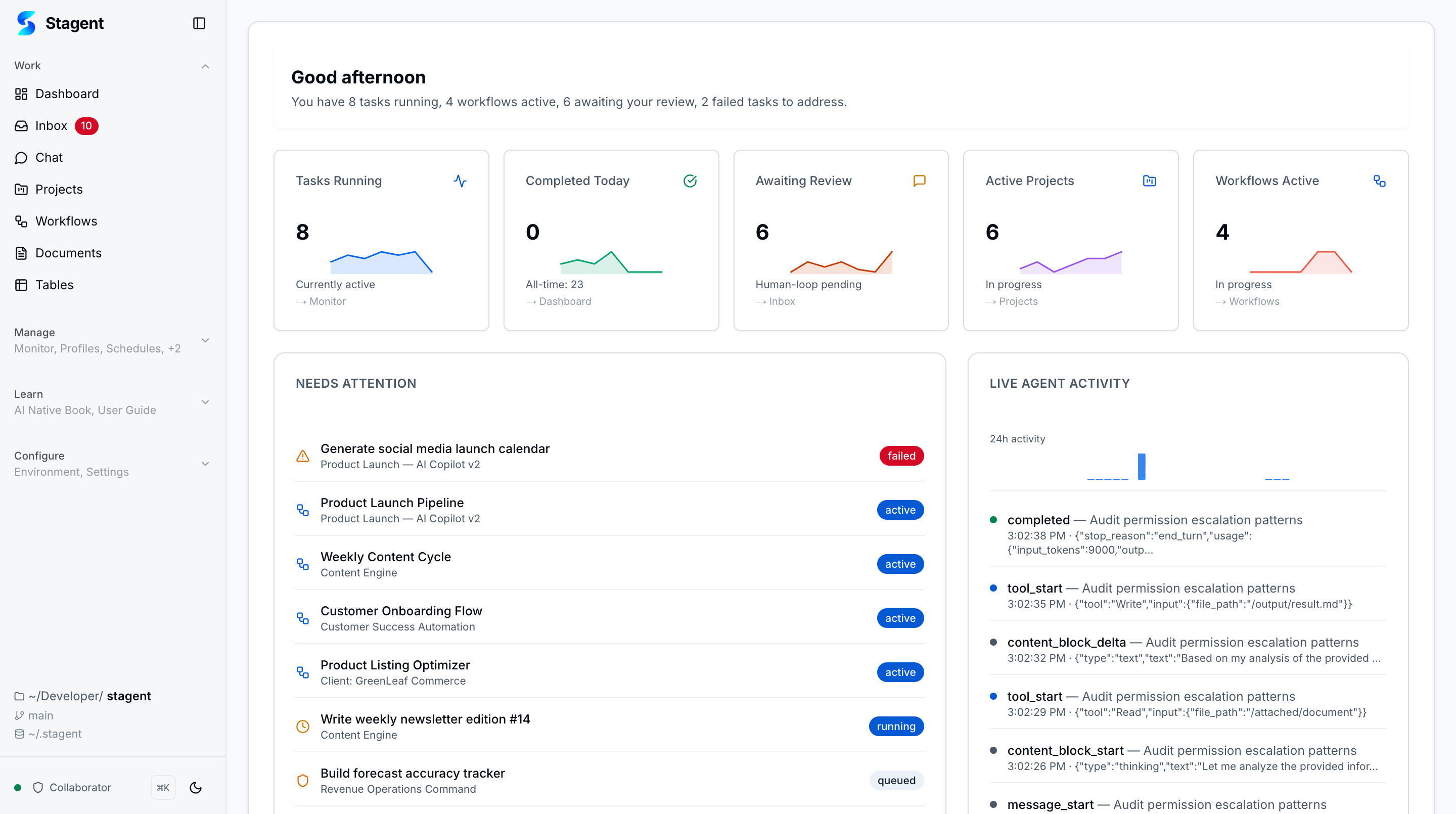
The ainative-business platform fills the gap between autonomous agents and governed business operations. It is a local-first workspace where AI agents run inside a governed system of projects, workflows, documents, inbox approvals, profiles, schedules, live monitoring, and cross-runtime cost governance.
Four Pillars
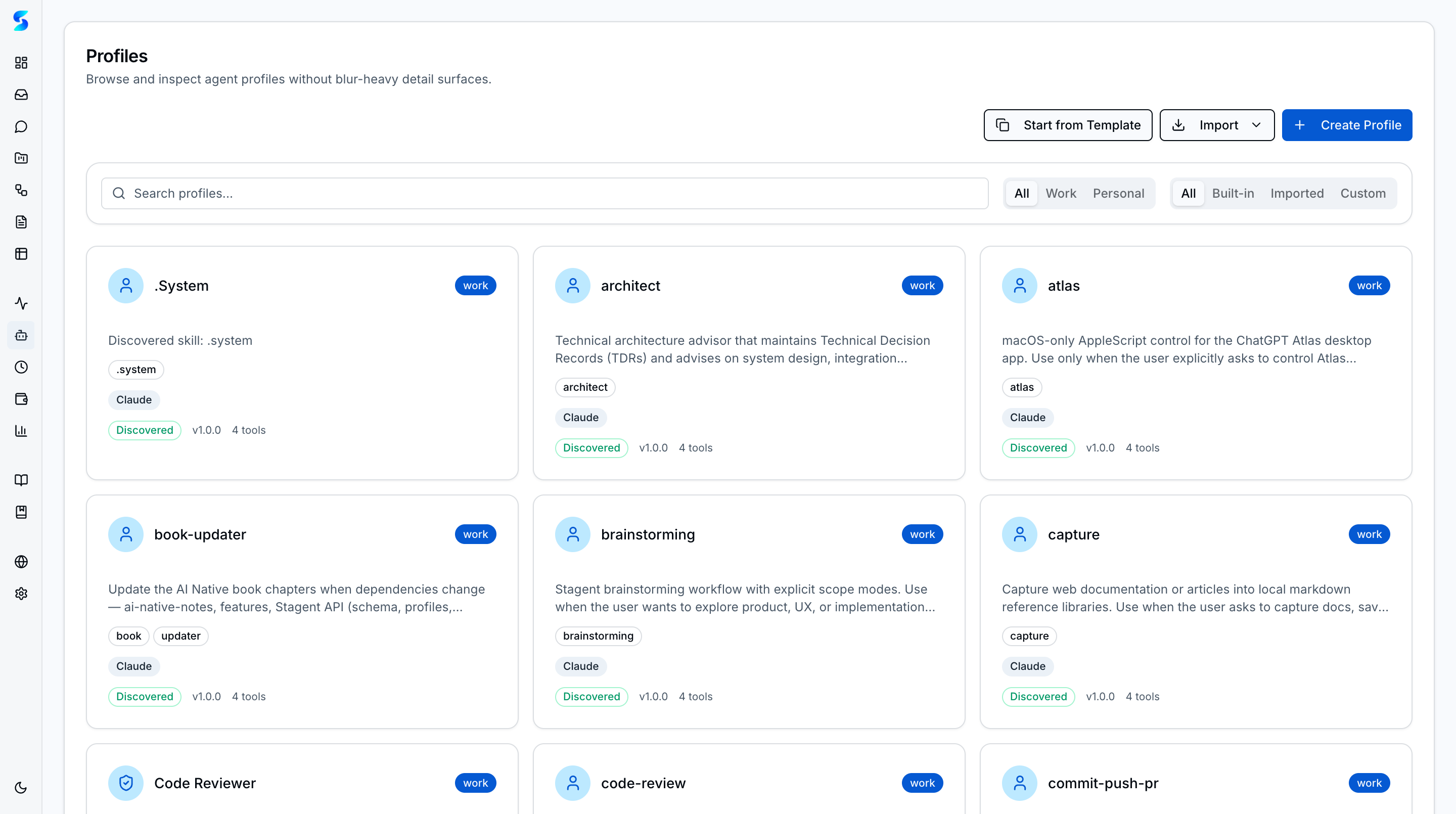
Orchestrate. AI agents for every business function. Technical and business-function profiles spanning marketing, sales, support, finance, content creation, and operations coordination. Smart runtime routing across 6 AI runtimes (Claude Code, OpenAI Codex, Anthropic Direct API, OpenAI Direct API, Ollama, and direct APIs). Multi-channel delivery through Slack and Telegram with bidirectional chat.
Automate. Workflows that run your business proactively. 37 workflow patterns (sequence, planner-executor, checkpoint, fork/join, autonomous loop, multi-agent swarm, and more). Heartbeat scheduling for proactive agent execution. Natural-language scheduling — type “run my marketing report every Monday at 9am” and it works.
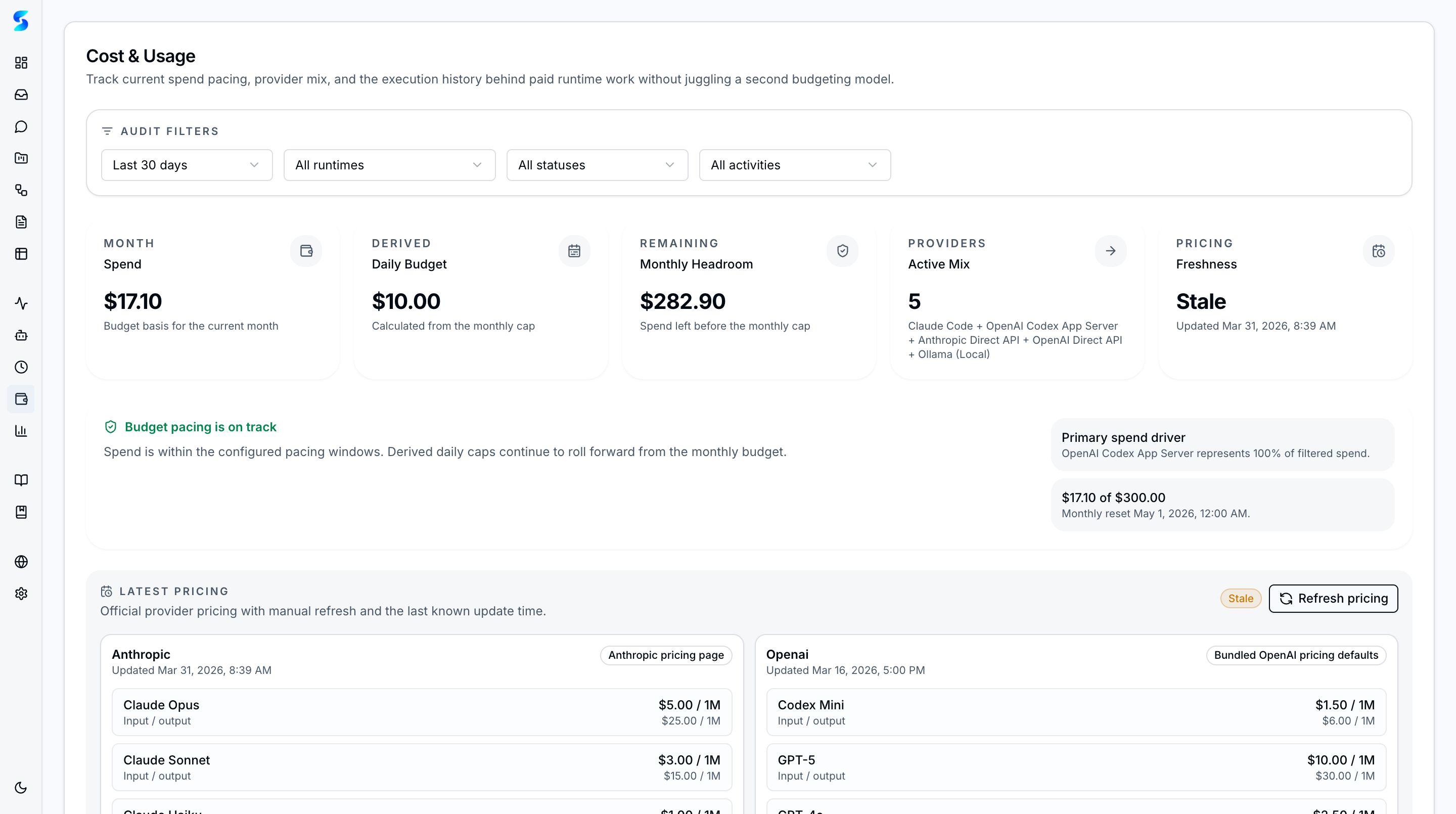
Govern. Human oversight without the bottleneck. The canUseTool governance gate ensures every agent action passes through a 5-step approval flow. Risk tiers classify tools by danger level. Budget guardrails prevent cost overruns. An approval inbox surfaces everything that needs human review.
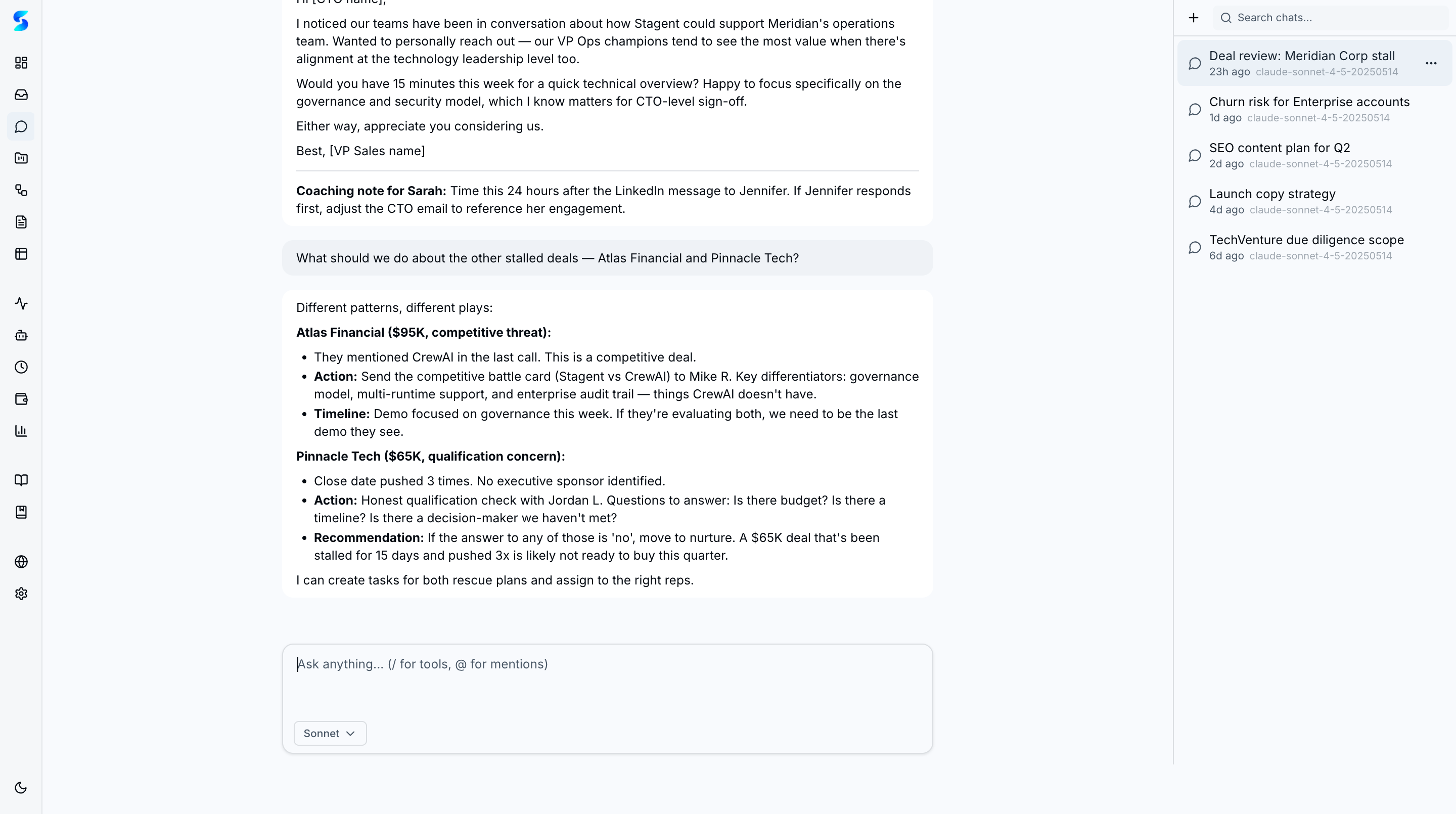
Converse. Talk to your business through any channel. Multi-model chat with progressive context injection (~53K token budget). Bidirectional Slack and Telegram integration. Entity detection for quick navigation. Context-aware suggested prompts that understand your workspace state.
Architecture
The ainative-business architecture follows three local-first layers:
- Browser layer — React 19 with 38 operator surfaces, real-time SSE streaming
- Server layer — Next.js 16 with 151 API endpoints
- External layer — Local SQLite database (WAL mode, 45+ tables), no cloud dependency
Technology stack: TypeScript (89% of codebase), Tailwind CSS v4, shadcn/ui, Drizzle ORM. Open source under Apache 2.0.
What’s Shipped Today
| Capability | Status |
|---|---|
| 148 features across 38 operator surfaces | Shipped |
| 56+ specialist agent profiles (incl. 8 business-function profiles) | Shipped |
| 37 workflow patterns with blueprint catalog | Shipped |
| 6 AI runtimes (Claude, OpenAI, Ollama, Codex, direct APIs) | Shipped |
| Bidirectional Slack & Telegram chat | Shipped |
| Heartbeat scheduling with proactive execution | Shipped |
| Natural-language scheduling | Shipped |
| Episodic agent memory with confidence decay | Shipped |
| Smart runtime routing | Shipped |
| Browser automation (Chrome DevTools + Playwright MCP) | Shipped |
| Skills repo import with deduplication | Shipped |
| Cross-runtime cost metering with budget guardrails | Shipped |
| Async agent-to-agent handoffs with governance gates | Shipped |
| Provider-agnostic tool layer across all runtimes | Shipped |
| Living Book (14 chapters across 4 parts, self-regenerating from source code) | Shipped |
| Structured data tables with spreadsheet editing, charts, triggers, and 12 agent tools | Shipped |
What’s on the Roadmap
| Capability | Timeline |
|---|---|
| Cloud sync & backup | H1 2026 |
| Multi-user workspaces with RBAC | H2 2026 |
| Portfolio dashboards for PE firms | H2 2026 |
| Agent marketplace (community profiles & blueprints) | H2 2026 |
| API-first headless deployment mode | 2027 |
6. Use Cases by Industry
Professional Services (Accounting, Legal, Consulting)
Highest immediate fit. PE firms are acquiring these businesses at record pace. Operations are process-heavy and automatable.
- Agent profiles: Financial Analyst, Operations Coordinator, Document Writer
- Workflows: Client onboarding pipeline, compliance review checkpoint, reporting sequence
- Governance: Approval gates on client-facing outputs, cost tracking per engagement
BPO and Contact Centers
$300B+ market with 41% YoY spike in PE activity. Agents can replace human agents at scale.
- Agent profiles: Customer Support Agent, Sales Researcher, Content Creator
- Workflows: Ticket triage (classify → respond → escalate), quality assurance checkpoint
- Governance: Sentiment-based escalation triggers, response template approval
Insurance Agencies
26% of PE deals motivated by digital transformation. Heavily process-driven with high regulation.
- Agent profiles: Research Agent, Document Writer, Operations Coordinator
- Workflows: Claims processing sequence, underwriting review checkpoint
- Governance: Regulatory compliance gates, audit trail for all agent decisions
Digital Marketing and Content Agencies
Natural fit for AI agents. Solo founders already building these. Agency model provides channel distribution.
- Agent profiles: Marketing Strategist, Content Creator, Sales Researcher
- Workflows: Content pipeline (research → create → review → publish), lead generation fork/join
- Governance: Brand voice consistency checks, client approval gates
E-Commerce Operations
Inventory, fulfillment, customer service, pricing — all agent-automatable.
- Agent profiles: Customer Support Agent, Financial Analyst, Operations Coordinator
- Workflows: Order processing sequence, inventory monitoring heartbeat, customer feedback loop
- Governance: Pricing change approval, refund authorization gates
7. The 10x Vision
The Amazon of the Agentic Economy
The 10x ainative-business is the platform where AI-native businesses are born, built, operated, and scaled — combining the business formation capabilities of Stripe Atlas, the operational infrastructure of Shopify, the agent marketplace of an App Store, and the portfolio governance of a PE operating system.
The Marketplace Flywheel
Stage 1 — Agent Profile Marketplace. Community-contributed specialist agent profiles with ratings, reviews, and usage data. Founders browse and deploy pre-configured agents like hiring from a talent marketplace.
Stage 2 — Workflow Blueprint Exchange. Complete business operation templates — “AI-Native Insurance Agency in a Box,” “Automated Content Marketing Pipeline,” “PE Portfolio Transformation Playbook” — combining multiple agent profiles, integrations, and governance rules.
Stage 3 — Agent-to-Agent Commerce Layer. As agents operating on ainative-business need services from other agents, ainative-business becomes the clearinghouse for agent-to-agent transactions. A research paper from Rothschild et al. (2025) titled “The Agentic Economy” identifies that most agents today are designed for human interaction but “few public offerings are designed to interact with each other” — a foundational infrastructure gap.
Stage 4 — Business-as-a-Service Platform. Launching an AI-native business becomes as simple as choosing a template, customizing parameters, and clicking “Launch.”
Physical AI: A Legitimate Future Play
As robotic systems, autonomous vehicles, and IoT devices become agent-controlled, they will need the same governance primitives ainative-business provides for software agents: human-in-the-loop approvals, tool permission policies, audit trails, budget guardrails, and workflow orchestration. The progression: software agents (today) → API-connected physical systems (near-term) → embodied AI agents (longer-term).
8. Getting Started
For Solo Founders
Start free with the open-source workspace. Install with npx ainative-business, deploy your first business-function agent in under 5 minutes, and start building with AI agents that work for your business — governed, visible, and under your control.
For Agency Owners
Use ainative-business as the infrastructure layer for client deployments. Reusable profiles and workflow blueprints mean you build once, deploy many times. Cost tracking per project keeps engagements profitable.
For PE Operating Partners
We help design, deploy, and govern AI agent operations across portfolio companies — from strategy through implementation.
Book a Conversation
Sources & References
- Grand View Research — Autonomous AI Agents Market Report (2025–2034)
- Gartner — Agentic AI Market Analysis (2025)
- RAND Corporation — AI Agent Production Failure Rates
- Carta — Startup Formation Trends (2019–2025)
- Deloitte — State of Generative AI in the Enterprise (2025)
- IDC — AI ROI Conversion Analysis
- BCG — Agentic AI in Private Equity Framework
- McKinsey — AI Transformation Value Creation Report
- EU AI Act — Regulatory Framework (effective August 2026)
- Rothschild et al. — “The Agentic Economy” (ACM, 2025)
- US Census Bureau — Solopreneur Economic Data
- Vista Equity Partners — Agentic AI Factory Announcement
- Apollo Global Management — Portfolio AI Performance Data
- Hg Capital — Catalyst AI Incubator Results